
November 10, 2026

Cat-Friendly Veterinary Clinics: How to Create a Calmer Experience from Arrival to Exam Room

A cat-friendly veterinary clinic is designed around the way cats experience unfamiliar places, sounds, smells and handling. Clinics can make visits calmer by preparing caregivers before arrival, reducing exposure to other animals, providing quiet waiting and examination spaces, using gentle handling protocols, and creating comfortable ward environments. Small workflow changes can make a meaningful difference.


For many cats, a veterinary visit starts long before the examination. The journey in a carrier, unfamiliar sounds, other animals in the waiting area and new smells can all influence how a cat responds to the clinic environment.


For veterinary teams, creating a better experience requires more than a comfortable examination table. It involves thoughtful cat clinic design, caregiver education, suitable handling techniques and consistent protocols across reception, consultation rooms and hospital wards.


A well-planned cat-friendly veterinary clinic considers the entire visit from the cat's perspective. The aim is to reduce avoidable stress, support safer handling and make veterinary care more approachable for cats and their caregivers.


The 2022 ISFM/AAFP Cat Friendly Veterinary Environment Guidelines provide practical recommendations for adapting clinic spaces and processes without necessarily undertaking expensive renovations.


What makes a veterinary clinic cat-friendly?

A cat-friendly veterinary practice recognizes that cats experience the clinic differently from people and many other patients. Unfamiliar animals, sudden sounds, strong smells, slippery surfaces and unfamiliar handling can contribute to fear and stress.


The 2022 ISFM/AAFP Cat Friendly Veterinary Environment Guidelines recommend considering the feline senses and natural behaviors when designing clinic environments. They address waiting areas, examination rooms, hospital wards, equipment and the caregiver's role in preparing cats for visits.


Some important principles include:

  • Reducing exposure to unfamiliar animals, particularly dogs.

  • Providing opportunities for cats to hide, perch and feel secure.

  • Minimizing unnecessary noise, movement and strong scents.

  • Using comfortable, non-slip surfaces and familiar bedding.

  • Allowing cats time and space to adjust to the environment.

  • Training the veterinary team in feline-friendly interactions.


A feline friendly veterinary clinic does not necessarily need a completely separate building or extensive structural changes. Smaller adjustments to room arrangement, scheduling, reception processes and staff behavior can also help.


How can clinics prepare cats before arrival?

A calmer visit begins before the cat reaches reception. Caregivers can play an important role when they understand how to prepare their cats for travel and what to expect at the clinic.


Veterinary teams can share simple pre-visit guidance through email, appointment confirmations, handouts or conversations when bookings are made.


Useful recommendations include:

1. Make the carrier familiar. Encourage caregivers to leave the carrier in a familiar area at home rather than bringing it out only before veterinary visits. Familiar bedding and treats may help create positive associations.

2. Use familiar bedding. A blanket or towel carrying familiar household scents can provide comfort during transport and at the clinic.

3. Cover the carrier when appropriate. A light towel or blanket can reduce exposure to unfamiliar sights and movement. The caregiver or veterinary team can adjust coverage according to the individual cat's response.

4. Explain the appointment process. Let caregivers know where to enter, where to wait and whether they should bring previous medical information, medication details or specific items.

5. Ask about previous experiences. Before the appointment, ask whether the cat becomes distressed during travel, reacts to other animals or has difficulty with handling. This helps the team prepare an appropriate approach.


The AAHA's guidance on stress-free veterinary visits also highlights preparation and positive associations as ways to help pets approach veterinary care more comfortably.


How should waiting areas reduce visual and noise stress?

The waiting room is often the first unfamiliar indoor environment a cat encounters. A busy reception area with barking dogs, ringing phones and frequent movement may increase anxiety before the consultation even begins.


A thoughtfully designed cat friendly waiting room should provide separation, quiet and a sense of security wherever possible.


Consider these practical changes:

  • Create separate waiting spaces: Where the clinic layout allows, provide a designated area for cats away from dogs and other unfamiliar animals.

  • Use visual barriers: Screens, furniture, plants or partitions can reduce direct visual contact between patients.

  • Provide elevated carrier surfaces: Offer stable chairs, shelves or tables where caregivers can place carriers above floor level, away from passing animals.

  • Reduce noise: Keep phone ringers, door alerts and unnecessary conversation at a manageable level.

  • Avoid strong scents: Use unscented or minimally scented cleaning products and avoid perfumes or air fresheners.

  • Keep carriers covered where suitable: Allow cats to remain partially or fully covered according to their individual needs.


A dedicated cat waiting room may not be possible for every practice. In that case, clinics can consider quieter appointment periods, designated waiting zones or direct movement to an examination room when one is ready.


The 2022 ISFM/AAFP guidelines discuss practical ways to separate patients using barriers and creative room arrangements rather than relying exclusively on major renovations. AAHA also recommends separate dog and cat waiting areas where possible and the use of barriers to reduce exposure between patients.


What should a cat-friendly exam room include?

The examination room should give cats opportunities to feel secure while allowing the veterinary team to perform necessary assessments.


A cat friendly veterinary clinic can make several practical changes without redesigning every room.

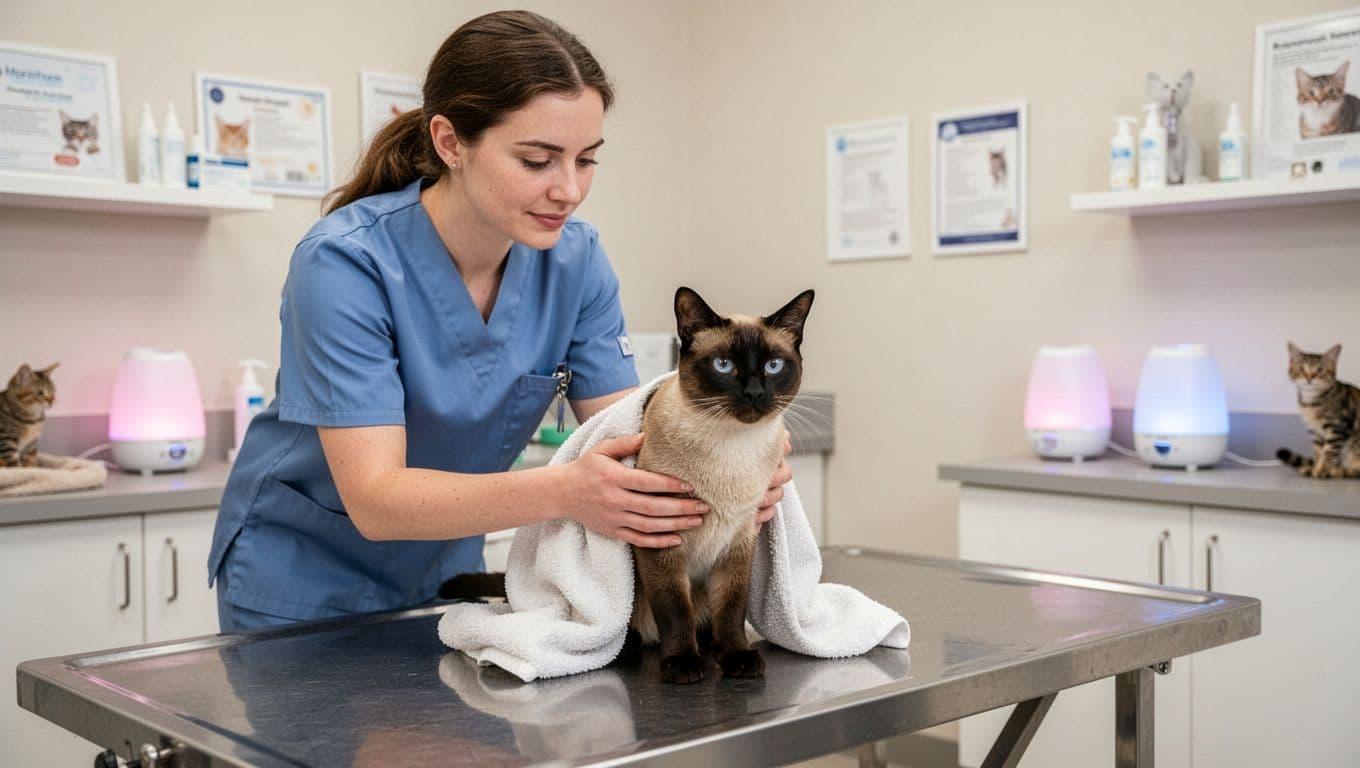
  • Comfortable examination surfaces: Metal tables and weighing scales can feel cold and slippery. Use non-slip mats, soft towels or blankets to provide more secure footing.
  • Accessible hiding spaces: Cats often feel safer when they can remain partly concealed. Provide suitable hiding options, such as a high-sided bed, carrier base or towel-covered area, while keeping difficult-to-reach gaps inaccessible.
  • Familiar scents: Clean examination surfaces and equipment between patients. Avoid strong chemical fragrances and consider the impact of residual animal scents.
  • Prepared equipment: Keep commonly used examination equipment in the room or in a portable kit. This reduces unnecessary movement in and out of the room during an appointment.
  • Flexible positioning: Not every cat will be comfortable on an examination table. Depending on the patient and the procedure, the veterinarian may be able to examine the cat in its carrier base, on a towel or in another suitable position.


Where space allows, a dedicated cat examination room can help reduce exposure to other species. Practices without a separate room may consider designated feline appointment periods.


How can handling and team protocols support calmer visits?

Even a carefully designed room cannot compensate for an approach that makes a cat feel threatened. The way veterinary professionals approach, handle and examine a cat is an important part of the overall experience.


Teams should be trained to recognize signs of fear or distress and adapt their approach to the individual patient.


Consider establishing shared protocols around the following:

  • Move at the cat's pace. Avoid rushing the patient through each stage of the consultation. Allow time to adjust before beginning the examination.
  • Approach thoughtfully. Avoid looming over the cat or forcing unnecessary interaction. A calm approach from the side and reduced direct staring may be more appropriate.
  • Allow choices where possible. Give cats opportunities to remain in a familiar carrier base, hide under a towel or choose a comfortable position, provided the examination can be performed safely.
  • Use positive reinforcement. When medically appropriate, offer suitable treats or other positive experiences. Respect the fact that a fearful cat may not want food or interaction.
  • Reduce unnecessary handling. Plan the examination and gather equipment in advance. Avoid repeating procedures or repositioning the cat without a clinical reason.
  • Record individual preferences. Document relevant handling observations, triggers and successful approaches in the patient's record so that the team can prepare for future visits.


The 2022 AAFP/ISFM Cat Friendly Veterinary Interaction Guidelines provide additional guidance on approaching and handling feline patients. These techniques should be adapted by trained veterinary professionals to each cat's behavior and clinical needs.


What should feline hospital wards consider?

Cats staying in hospital need an environment that supports comfort, hygiene, observation and appropriate clinical care.


A well-planned feline ward should consider:

  • Visual separation: Prevent unnecessary exposure to unfamiliar animals and excessive movement.

  • Quiet surroundings: Reduce noise from equipment, staff movement and neighboring patients.

  • Hiding opportunities: Provide suitable covered or enclosed resting spaces.

  • Comfortable bedding: Use soft, clean bedding and familiar items from home when appropriate.

  • Food and water preferences: Ask caregivers about the cat's usual diet and feeding preferences where relevant to the care plan.

  • Litter arrangements: Provide suitable litter trays and maintain appropriate hygiene.

  • Temperature and comfort: Consider the needs of unwell, recovering or sedated cats and follow appropriate warming and monitoring procedures.


Ward design should also allow staff to observe patients and provide treatment safely. Comfortable spaces and practical clinical access need to work together.


The ISFM/AAFP environment guidelines provide further recommendations for feline hospital accommodation, including bedding, hiding spaces, food, water and litter considerations.


Where can scheduling and digital check-in reduce arrival friction?

A calmer clinic experience is influenced by what happens before and during arrival. Long waits, crowded reception areas and unclear appointment processes can make an already unfamiliar experience more difficult for cats and their caregivers.


This is where a well-organized digital workflow can support the clinic team.


A suitable veterinary scheduling system helps teams organize appointment slots, allocate time and prepare for the day's caseload. Clinics may also use appointment reminders and pre-visit communication to help caregivers arrive prepared.


Digital check-in can reduce some of the administrative steps at reception. For example, a check-in kiosk gives clients a self-service way to check in, helping streamline arrivals and reduce front-desk workload.


Woovet offers features that can support these operational workflows:

  • Calendar and Appointment Scheduling: Manage appointments, rescheduling, confirmations and reminders.

  • Woomypet Patient Portal: Allows pet parents to book appointments, view records and request services.

  • Check-In Kiosk: Supports self-service check-in and more organized arrivals.

  • EMR: Keeps patient histories and clinical records accessible to the veterinary team.

  • Client Communication and Reminders: Helps practices coordinate appointment reminders, follow-ups and client updates.

These tools do not replace feline-friendly space design or trained handling. Instead, they help teams organize the administrative side of the visit so they can give more attention to the patient and caregiver.


Explore Woovet Features to learn more about its practice management and client experience tools. You can also read the Veterinary Scheduling Software Selection Guide for additional guidance on choosing scheduling software for your clinic.


Make every feline visit more thoughtful

Creating a cat-friendly veterinary practice is an ongoing process. It involves understanding feline behavior, preparing caregivers, reducing avoidable environmental stress and helping the veterinary team follow consistent protocols.


Not every clinic can introduce separate waiting rooms or dedicated examination spaces immediately. However, small improvements such as quieter reception areas, elevated carrier surfaces, comfortable examination mats and better appointment coordination can be practical starting points.


A calmer visit benefits more than the patient. It can also make consultations more manageable for caregivers and veterinary teams.


Explore how Woovet can help organize appointments and patient information for your feline-focused practice.

Frequently Asked Questions

What makes a veterinary clinic cat-friendly?
A cat-friendly veterinary clinic considers feline behaviour and sensory needs. It aims to reduce exposure to unfamiliar animals, loud sounds and strong scents while providing comfortable spaces, hiding opportunities and gentle handling.
How can a veterinary clinic reduce cat stress in the waiting room?
Clinics can reduce cat stress by providing separate waiting areas where possible, using visual barriers, keeping noise low, avoiding strong fragrances and offering elevated surfaces for carriers.
What should a cat-friendly examination room include?
A cat-friendly examination room should have non-slip surfaces, soft bedding, accessible hiding options, minimal strong scents and prepared equipment to reduce unnecessary movement during the consultation.
Do veterinary clinics need a separate waiting room for cats?
A separate cat waiting area is ideal where space permits, but it is not the only solution. Clinics can also use barriers, quieter appointment periods and direct access to an available examination room.
How can veterinary software support a cat-friendly clinic?
Veterinary software can help organise appointments, reminders, patient records and digital check-in. These tools can reduce administrative friction and help teams prepare for arrivals, complementing feline-friendly clinic design and handling protocols.
glare bg
November 10, 2026

Cat-Friendly Veterinary Clinics: How to Create a Calmer Experience from Arrival to Exam Room

A cat-friendly veterinary clinic is designed around the way cats experience unfamiliar places, sounds, smells and handling. Clinics can make visits calmer by preparing caregivers before arrival, reducing exposure to other animals, providing quiet waiting and examination spaces, using gentle handling protocols, and creating comfortable ward environments. Small workflow changes can make a meaningful difference.


For many cats, a veterinary visit starts long before the examination. The journey in a carrier, unfamiliar sounds, other animals in the waiting area and new smells can all influence how a cat responds to the clinic environment.


For veterinary teams, creating a better experience requires more than a comfortable examination table. It involves thoughtful cat clinic design, caregiver education, suitable handling techniques and consistent protocols across reception, consultation rooms and hospital wards.


A well-planned cat-friendly veterinary clinic considers the entire visit from the cat's perspective. The aim is to reduce avoidable stress, support safer handling and make veterinary care more approachable for cats and their caregivers.


The 2022 ISFM/AAFP Cat Friendly Veterinary Environment Guidelines provide practical recommendations for adapting clinic spaces and processes without necessarily undertaking expensive renovations.


What makes a veterinary clinic cat-friendly?

A cat-friendly veterinary practice recognizes that cats experience the clinic differently from people and many other patients. Unfamiliar animals, sudden sounds, strong smells, slippery surfaces and unfamiliar handling can contribute to fear and stress.


The 2022 ISFM/AAFP Cat Friendly Veterinary Environment Guidelines recommend considering the feline senses and natural behaviors when designing clinic environments. They address waiting areas, examination rooms, hospital wards, equipment and the caregiver's role in preparing cats for visits.


Some important principles include:

  • Reducing exposure to unfamiliar animals, particularly dogs.

  • Providing opportunities for cats to hide, perch and feel secure.

  • Minimizing unnecessary noise, movement and strong scents.

  • Using comfortable, non-slip surfaces and familiar bedding.

  • Allowing cats time and space to adjust to the environment.

  • Training the veterinary team in feline-friendly interactions.


A feline friendly veterinary clinic does not necessarily need a completely separate building or extensive structural changes. Smaller adjustments to room arrangement, scheduling, reception processes and staff behavior can also help.


How can clinics prepare cats before arrival?

A calmer visit begins before the cat reaches reception. Caregivers can play an important role when they understand how to prepare their cats for travel and what to expect at the clinic.


Veterinary teams can share simple pre-visit guidance through email, appointment confirmations, handouts or conversations when bookings are made.


Useful recommendations include:

1. Make the carrier familiar. Encourage caregivers to leave the carrier in a familiar area at home rather than bringing it out only before veterinary visits. Familiar bedding and treats may help create positive associations.

2. Use familiar bedding. A blanket or towel carrying familiar household scents can provide comfort during transport and at the clinic.

3. Cover the carrier when appropriate. A light towel or blanket can reduce exposure to unfamiliar sights and movement. The caregiver or veterinary team can adjust coverage according to the individual cat's response.

4. Explain the appointment process. Let caregivers know where to enter, where to wait and whether they should bring previous medical information, medication details or specific items.

5. Ask about previous experiences. Before the appointment, ask whether the cat becomes distressed during travel, reacts to other animals or has difficulty with handling. This helps the team prepare an appropriate approach.


The AAHA's guidance on stress-free veterinary visits also highlights preparation and positive associations as ways to help pets approach veterinary care more comfortably.


How should waiting areas reduce visual and noise stress?

The waiting room is often the first unfamiliar indoor environment a cat encounters. A busy reception area with barking dogs, ringing phones and frequent movement may increase anxiety before the consultation even begins.


A thoughtfully designed cat friendly waiting room should provide separation, quiet and a sense of security wherever possible.


Consider these practical changes:

  • Create separate waiting spaces: Where the clinic layout allows, provide a designated area for cats away from dogs and other unfamiliar animals.

  • Use visual barriers: Screens, furniture, plants or partitions can reduce direct visual contact between patients.

  • Provide elevated carrier surfaces: Offer stable chairs, shelves or tables where caregivers can place carriers above floor level, away from passing animals.

  • Reduce noise: Keep phone ringers, door alerts and unnecessary conversation at a manageable level.

  • Avoid strong scents: Use unscented or minimally scented cleaning products and avoid perfumes or air fresheners.

  • Keep carriers covered where suitable: Allow cats to remain partially or fully covered according to their individual needs.


A dedicated cat waiting room may not be possible for every practice. In that case, clinics can consider quieter appointment periods, designated waiting zones or direct movement to an examination room when one is ready.


The 2022 ISFM/AAFP guidelines discuss practical ways to separate patients using barriers and creative room arrangements rather than relying exclusively on major renovations. AAHA also recommends separate dog and cat waiting areas where possible and the use of barriers to reduce exposure between patients.


What should a cat-friendly exam room include?

The examination room should give cats opportunities to feel secure while allowing the veterinary team to perform necessary assessments.


A cat friendly veterinary clinic can make several practical changes without redesigning every room.

  • Comfortable examination surfaces: Metal tables and weighing scales can feel cold and slippery. Use non-slip mats, soft towels or blankets to provide more secure footing.
  • Accessible hiding spaces: Cats often feel safer when they can remain partly concealed. Provide suitable hiding options, such as a high-sided bed, carrier base or towel-covered area, while keeping difficult-to-reach gaps inaccessible.
  • Familiar scents: Clean examination surfaces and equipment between patients. Avoid strong chemical fragrances and consider the impact of residual animal scents.
  • Prepared equipment: Keep commonly used examination equipment in the room or in a portable kit. This reduces unnecessary movement in and out of the room during an appointment.
  • Flexible positioning: Not every cat will be comfortable on an examination table. Depending on the patient and the procedure, the veterinarian may be able to examine the cat in its carrier base, on a towel or in another suitable position.


Where space allows, a dedicated cat examination room can help reduce exposure to other species. Practices without a separate room may consider designated feline appointment periods.


How can handling and team protocols support calmer visits?

Even a carefully designed room cannot compensate for an approach that makes a cat feel threatened. The way veterinary professionals approach, handle and examine a cat is an important part of the overall experience.


Teams should be trained to recognize signs of fear or distress and adapt their approach to the individual patient.


Consider establishing shared protocols around the following:

  • Move at the cat's pace. Avoid rushing the patient through each stage of the consultation. Allow time to adjust before beginning the examination.
  • Approach thoughtfully. Avoid looming over the cat or forcing unnecessary interaction. A calm approach from the side and reduced direct staring may be more appropriate.
  • Allow choices where possible. Give cats opportunities to remain in a familiar carrier base, hide under a towel or choose a comfortable position, provided the examination can be performed safely.
  • Use positive reinforcement. When medically appropriate, offer suitable treats or other positive experiences. Respect the fact that a fearful cat may not want food or interaction.
  • Reduce unnecessary handling. Plan the examination and gather equipment in advance. Avoid repeating procedures or repositioning the cat without a clinical reason.
  • Record individual preferences. Document relevant handling observations, triggers and successful approaches in the patient's record so that the team can prepare for future visits.


The 2022 AAFP/ISFM Cat Friendly Veterinary Interaction Guidelines provide additional guidance on approaching and handling feline patients. These techniques should be adapted by trained veterinary professionals to each cat's behavior and clinical needs.


What should feline hospital wards consider?

Cats staying in hospital need an environment that supports comfort, hygiene, observation and appropriate clinical care.


A well-planned feline ward should consider:

  • Visual separation: Prevent unnecessary exposure to unfamiliar animals and excessive movement.

  • Quiet surroundings: Reduce noise from equipment, staff movement and neighboring patients.

  • Hiding opportunities: Provide suitable covered or enclosed resting spaces.

  • Comfortable bedding: Use soft, clean bedding and familiar items from home when appropriate.

  • Food and water preferences: Ask caregivers about the cat's usual diet and feeding preferences where relevant to the care plan.

  • Litter arrangements: Provide suitable litter trays and maintain appropriate hygiene.

  • Temperature and comfort: Consider the needs of unwell, recovering or sedated cats and follow appropriate warming and monitoring procedures.


Ward design should also allow staff to observe patients and provide treatment safely. Comfortable spaces and practical clinical access need to work together.


The ISFM/AAFP environment guidelines provide further recommendations for feline hospital accommodation, including bedding, hiding spaces, food, water and litter considerations.


Where can scheduling and digital check-in reduce arrival friction?

A calmer clinic experience is influenced by what happens before and during arrival. Long waits, crowded reception areas and unclear appointment processes can make an already unfamiliar experience more difficult for cats and their caregivers.


This is where a well-organized digital workflow can support the clinic team.


A suitable veterinary scheduling system helps teams organize appointment slots, allocate time and prepare for the day's caseload. Clinics may also use appointment reminders and pre-visit communication to help caregivers arrive prepared.


Digital check-in can reduce some of the administrative steps at reception. For example, a check-in kiosk gives clients a self-service way to check in, helping streamline arrivals and reduce front-desk workload.


Woovet offers features that can support these operational workflows:

  • Calendar and Appointment Scheduling: Manage appointments, rescheduling, confirmations and reminders.

  • Woomypet Patient Portal: Allows pet parents to book appointments, view records and request services.

  • Check-In Kiosk: Supports self-service check-in and more organized arrivals.

  • EMR: Keeps patient histories and clinical records accessible to the veterinary team.

  • Client Communication and Reminders: Helps practices coordinate appointment reminders, follow-ups and client updates.

These tools do not replace feline-friendly space design or trained handling. Instead, they help teams organize the administrative side of the visit so they can give more attention to the patient and caregiver.


Explore Woovet Features to learn more about its practice management and client experience tools. You can also read the Veterinary Scheduling Software Selection Guide for additional guidance on choosing scheduling software for your clinic.


Make every feline visit more thoughtful

Creating a cat-friendly veterinary practice is an ongoing process. It involves understanding feline behavior, preparing caregivers, reducing avoidable environmental stress and helping the veterinary team follow consistent protocols.


Not every clinic can introduce separate waiting rooms or dedicated examination spaces immediately. However, small improvements such as quieter reception areas, elevated carrier surfaces, comfortable examination mats and better appointment coordination can be practical starting points.


A calmer visit benefits more than the patient. It can also make consultations more manageable for caregivers and veterinary teams.


Explore how Woovet can help organize appointments and patient information for your feline-focused practice.

Frequently Asked Questions

What makes a veterinary clinic cat-friendly?
A cat-friendly veterinary clinic considers feline behaviour and sensory needs. It aims to reduce exposure to unfamiliar animals, loud sounds and strong scents while providing comfortable spaces, hiding opportunities and gentle handling.
How can a veterinary clinic reduce cat stress in the waiting room?
Clinics can reduce cat stress by providing separate waiting areas where possible, using visual barriers, keeping noise low, avoiding strong fragrances and offering elevated surfaces for carriers.
What should a cat-friendly examination room include?
A cat-friendly examination room should have non-slip surfaces, soft bedding, accessible hiding options, minimal strong scents and prepared equipment to reduce unnecessary movement during the consultation.
Do veterinary clinics need a separate waiting room for cats?
A separate cat waiting area is ideal where space permits, but it is not the only solution. Clinics can also use barriers, quieter appointment periods and direct access to an available examination room.
How can veterinary software support a cat-friendly clinic?
Veterinary software can help organise appointments, reminders, patient records and digital check-in. These tools can reduce administrative friction and help teams prepare for arrivals, complementing feline-friendly clinic design and handling protocols.
Get Started with Woovet AI-Powered
Vet Practice Management

Join the hundreds of vets already using Woovet to cut admin time and focus on what really matters.