Veterinary Day Surgery Workflow: A Checklist from Admission to Recovery and Discharge
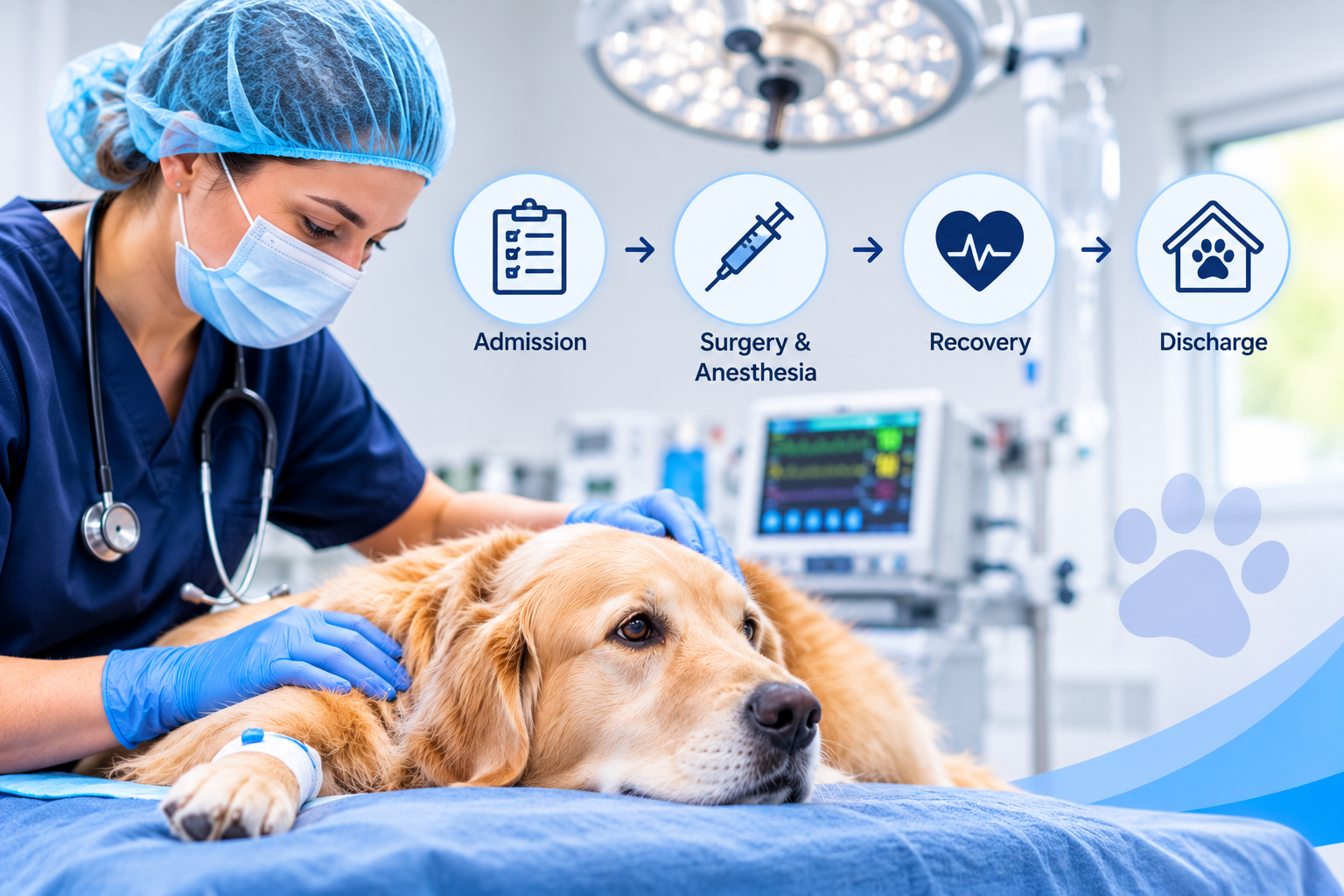
A veterinary day surgery workflow is a structured process that guides a patient from preoperative preparation and admission through surgery, anesthesia monitoring, recovery, and discharge. A consistent checklist helps veterinary teams verify patient details, document clinical observations, coordinate responsibilities, communicate instructions, and track follow-up care.
Day surgery involves more than completing a procedure and sending the patient home. Every stage, from confirming the appointment and obtaining consent to monitoring recovery and explaining aftercare, requires clear coordination between veterinarians, surgery leads, and veterinary technicians.
Without a consistent process, important information can be missed during staff handovers, documentation can remain incomplete, and discharge instructions may vary between team members.
A well-defined veterinary day surgery workflow helps standardize these activities while keeping clinical decisions with the veterinary professionals responsible for the patient.
What Should Happen Before the Surgery Date?
Preparation should begin before the patient arrives. The team should review the planned procedure, patient history, relevant clinical information, and any preoperative instructions.
A practical pre-surgery checklist includes:
Confirming the patient's identity and scheduled procedure.
Reviewing medical history, previous anesthesia records, allergies, and current medications.
Checking relevant diagnostic results and preoperative assessments.
Confirming the veterinarian's plan and any required equipment.
Providing the owner with individualized fasting and admission instructions.
Confirming consent requirements and estimated costs.
Planning staffing, theatre availability, and recovery arrangements.
Instructions should reflect the patient's condition and planned procedure rather than relying on a generic template.
Woovet's Calendar and Appointment Scheduling can help teams organize appointments and maintain visibility into the daily schedule.
What Belongs on the Day-of-Surgery Admission Checklist?
Admission is the opportunity to verify that the patient, procedure, and documentation are aligned before proceeding.
A veterinary surgery admission checklist should include:
Patient and owner identification.
Planned procedure and surgical site, where applicable.
Confirmation of consent and relevant authorizations.
Updated medication and health history.
Preoperative assessment and recorded vital parameters.
Confirmation of fasting or other preparation instructions.
Required diagnostic results and clinical notes.
Any identified concerns communicated to the responsible veterinarian.
Any discrepancy should be resolved before the patient progresses to the next stage.
How Should Roles, Consent and Records Be Confirmed?
A smooth surgical workflow depends on knowing who is responsible for each task.
The veterinarian should oversee clinical assessment, procedural planning, and authorization to proceed. The anesthesia lead or designated anesthetist should manage anesthesia-related monitoring. Technicians may support preparation, patient handling, documentation, and recovery according to their training and responsibilities.
Consent should clearly document the procedure discussed, relevant risks, and owner authorization.
Clinical information should be recorded in a consistent format. Woovet's SOAP-based EMR supports structured documentation of subjective information, objective findings, assessment, and treatment plans. Read the SOAP-Based Veterinary Medical Records Guide for more on organized clinical records.
What Should Teams Document During Anesthesia and the Procedure?
The anesthesia record should provide a clear account of the patient's condition, medications administered, monitoring observations, and interventions.
The 2025 American College of Veterinary Anesthesia and Analgesia (ACVAA) guidelines address monitoring of anesthetic depth, circulation, oxygenation, ventilation, and temperature. They also emphasize dedicated monitoring personnel and documented observations.
The procedure record should capture the operation performed, relevant findings, medications, complications, and postoperative plan. Any deviation from the planned procedure should be documented.
The veterinary surgical workflow should make these records accessible to the team responsible for recovery and subsequent care.
How Should Recovery Monitoring and Handover Be Organized?
Recovery is a critical stage, not simply waiting for the patient to wake up. The ACVAA guidance recommends continuous visual observation until the patient can maintain physiological stability, with regular assessment of relevant parameters.
A recovery checklist should record:
Recovery start time and responsible personnel.
Respiratory and cardiovascular observations.
Temperature and other relevant monitoring values.
Pain and nausea assessments.
Medications and interventions.
Changes in patient status and escalation actions.
Handover notes and the next planned assessment.
A designated person should remain responsible for communicating changes and ensuring the incoming team understands the patient's current status.
Woovet's VET TRACK Whiteboard provides a dashboard for monitoring hospitalized patients, treatments, care progress, and shift handovers. It can support visibility and coordination during inpatient care, alongside the clinical anesthesia and recovery records.
What Belongs in a Clear Discharge Conversation?
Discharge should happen only after the attending veterinarian determines that the patient meets appropriate recovery criteria. The 2025 ACVAA guidance identifies normothermia, mental orientation, and ability to ambulate (unless clinically inappropriate), with pain and nausea controlled, as discharge considerations.
The veterinary patient discharge checklist should cover:
Medication names, doses, and administration instructions.
Feeding and water guidance.
Activity restrictions and recovery environment.
Incision or wound care.
Follow-up appointment details.
Expected recovery signs and warning signs.
Contact information and instructions for urgent concerns.
AAHA's Patient Discharge Protocol emphasizes consistent owner communication, defined staff responsibilities, and clear instructions covering medications, food, water, exercise, and sutures.
How Should Follow-Up and Escalation Instructions Be Tracked?
Discharge is not the end of the workflow. Teams should record when the owner should be contacted, when the patient needs a recheck, and what symptoms require veterinary attention.
Follow-up tasks should have an assigned owner, due date, and completion status. Unanswered calls, missed appointments, and reported concerns should remain visible until addressed.
Woovet supports appointment reminders, follow-ups, shared tasks, and patient-record access, helping teams keep postoperative communication connected.
How Can Clinics Audit the Day-Surgery Workflow?
Regular audits help identify gaps in documentation, handovers, patient preparation, and owner communication.
Clinics can review whether admission records were complete, consent was documented, anesthesia observations were recorded, recovery criteria were assessed, discharge instructions were provided, and follow-up actions were assigned.
The RCVS Knowledge Green Theatre Checklist provides an additional resource for reviewing sustainable theatre practices across preparation, pharmaceutical use, surgery, and post-surgery activities. It complements—but does not replace—a clinic's patient-safety checklist and clinical protocols.
Keep Surgery-Day Records, Appointments and Patient Workflows Connected
A consistent veterinary day-surgery workflow depends on accurate records, clear responsibilities, and reliable communication from admission to discharge.
Woovet brings together EMR, appointment scheduling, patient monitoring through VET TRACK, task management, and client communication to help veterinary teams coordinate important practice workflows.
Keep surgery-day records, appointments and patient workflows connected with Woovet.
Explore Woovet Features or book a Woovet demo.
Frequently Asked Questions
What is included in a veterinary surgery checklist?
Why is anesthesia monitoring documentation important in veterinary day surgery?
When is a veterinary patient ready for discharge after surgery?
What should veterinary discharge instructions include?
Can veterinary practice management software help organize day-surgery workflows?
Join the hundreds of vets already using Woovet to cut admin time and focus on what really matters.