November 16, 2026

Veterinary Telemedicine: Use Cases, Workflow & Professional Boundaries

Veterinary telemedicine uses digital communication to support patient-specific veterinary care remotely. It can be useful for appropriate follow-ups, monitoring and selected consultations, but it does not replace physical examinations when they are clinically necessary. Clinics should establish clear eligibility criteria, obtain informed consent, document consultations, protect client data and follow applicable VCPR and licensing requirements.


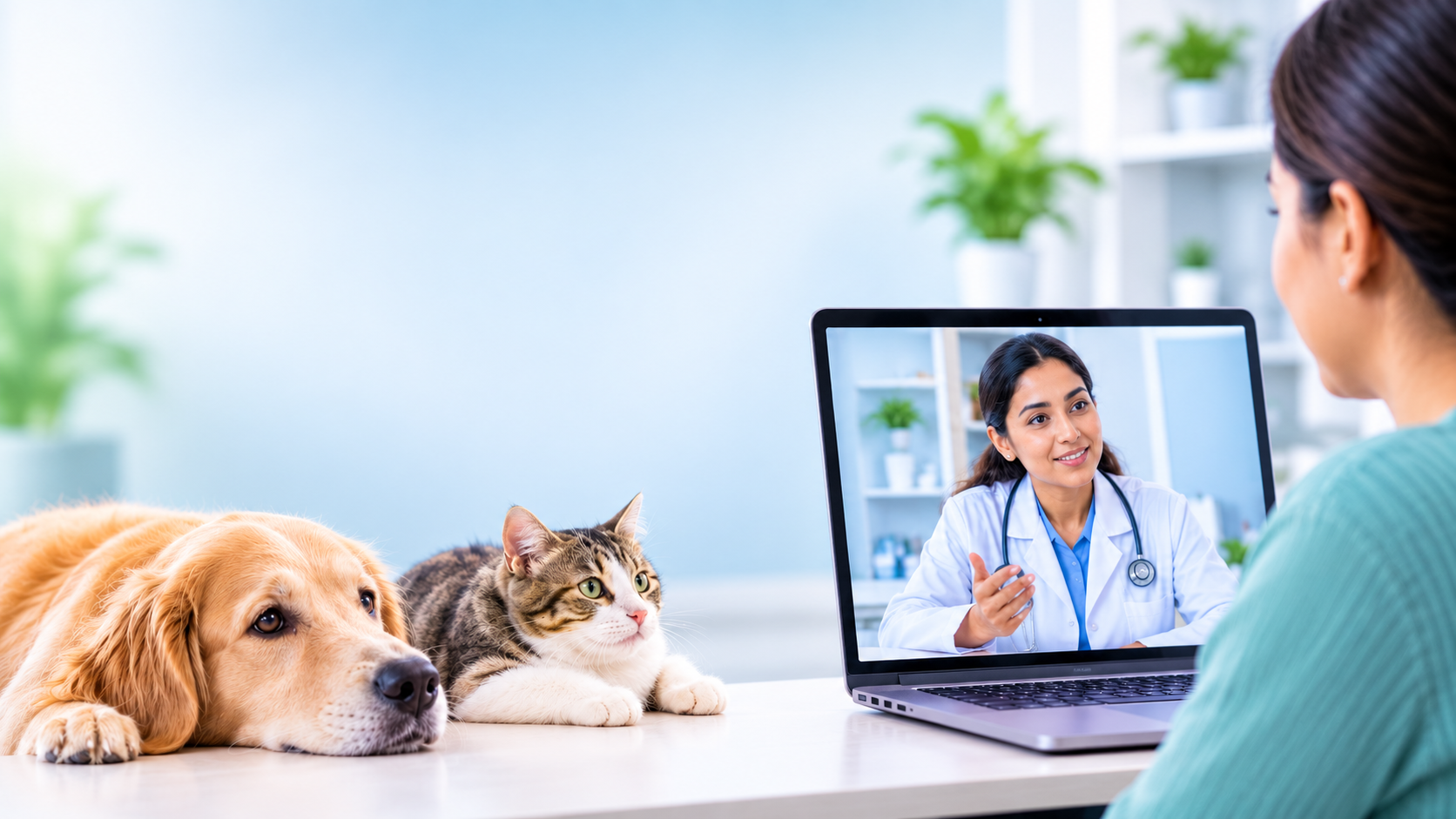
A veterinary consultation does not always have to begin with a client bringing their pet into the clinic. In some situations, a video consultation, shared photograph or remote discussion can help a veterinarian review a patient's progress, address follow-up questions or determine whether an in-person examination is needed.


For veterinary practices, this creates an opportunity to make care more accessible while maintaining continuity between clinic visits. However, offering virtual consultations involves more than selecting a video-calling platform. Clinics need to determine which cases are suitable, how patient information will be collected, what can be assessed remotely and when the consultation must move to an in-person examination.


This is where veterinary telemedicine becomes an important part of a connected-care strategy.


When implemented responsibly, telemedicine in veterinary practice can support follow-up care, client communication and selected clinical workflows. But it also introduces professional considerations around the veterinarian-client-patient relationship (VCPR), documentation, consent, privacy and the limitations of remote assessment.


For practice owners, medical directors and veterinarians evaluating virtual-care workflows, the objective should not be to move every consultation online. It should be to identify where remote care adds value and establish a reliable process for delivering it.


What Is the Difference Between Veterinary Telehealth, Teletriage and Telemedicine?


These terms are related, but they do not describe exactly the same service. Understanding the differences helps clinics establish appropriate workflows and avoid offering a service beyond its professional or regulatory limits.


Veterinary telehealth is the broader use of technology to deliver or exchange veterinary health information, education, advice and care remotely. It can include phone calls, secure messaging, video consultations, remote monitoring and electronic communication between veterinary professionals.


The 2021 AAHA/AVMA Telehealth Guidelines for Small-Animal Practice identify several components of connected care.


  • Teleadvice involves providing general recommendations or educational information. For example, a clinic may send general guidance about preventive wellness visits or seasonal parasite prevention. It is not intended to diagnose or treat a specific patient's condition.
  • Veterinary teletriage involves assessing the urgency of a patient's situation remotely to help determine the appropriate next step. For instance, a veterinary team member may ask about symptoms, review a video and advise whether the pet needs immediate emergency attention or a scheduled examination. Teletriage does not involve making a definitive diagnosis.
  • Veterinary telemedicine involves the electronic exchange of patient-specific medical information to assess and improve an animal's clinical health status. For example, a veterinarian may conduct a video consultation to evaluate a patient's postoperative recovery when the case is appropriate for remote assessment and applicable VCPR requirements are met.
  • Teleconsulting involves communication between veterinary professionals, such as a primary veterinarian discussing a case with a specialist.
  • Telemonitoring involves remotely collecting or reviewing patient information over time, potentially using connected devices or monitoring technology.


The distinction matters because the services can involve different professional responsibilities, levels of clinical decision-making and regulatory requirements. Clinics should define which services they provide and ensure staff understand the difference.


Which Cases May Suit Virtual Follow-Up—and Which Need an In-Person Exam?


Not every veterinary concern can be evaluated accurately through a screen. A veterinarian must decide whether the available information is sufficient to provide appropriate care remotely.


Veterinary virtual consultations may be useful when the patient has already been examined and the veterinarian needs to assess progress, review information or discuss ongoing care.


Cases that may suit veterinary telemedicine

Depending on the patient's condition and applicable regulations, suitable use cases may include:

  • Postoperative follow-ups: Reviewing recovery progress, discussing the owner's observations and assessing visible changes around a surgical site when a remote assessment is clinically appropriate.

  • Chronic condition check-ins: Discussing how a patient is responding to an established management plan and identifying concerns that may require further examination.

  • Senior pet consultations: Reviewing mobility, behaviour, appetite and quality-of-life observations. Remote discussions can be particularly useful when travel is difficult for the pet or caregiver.

  • Medication and care-plan discussions: Reviewing adherence challenges, explaining existing instructions and discussing whether a patient needs reassessment.

  • Palliative and hospice support: Providing caregiver guidance and discussing comfort, behaviour and changes that may affect the care plan.

  • Follow-up discussions: Explaining test findings or discussing an established treatment plan, where remote communication is appropriate.


The AAHA guidance on using telehealth and telemedicine technologies highlights potential benefits for senior patients, including follow-up assessments, reviewing changes in mobility and pain control, and discussing home-care challenges.


Cases that generally require in-person assessment

A remote consultation may be insufficient when the veterinarian needs physical examination findings, diagnostic testing, immediate intervention or close monitoring.


Examples include:

  • Difficulty breathing, collapse or suspected severe trauma.
  • Seizures or other acute neurological signs.
  • Severe or uncontrolled pain.
  • Suspected poisoning or ingestion of a potentially harmful substance.
  • Significant bleeding or rapidly worsening symptoms.
  • Conditions requiring palpation, imaging, laboratory tests or other physical diagnostics.
  • Cases where the available video, images or owner descriptions are inadequate for a reliable assessment.


These examples are not a substitute for clinical triage protocols. The responsible veterinary professional must evaluate the urgency and appropriate level of care.


A useful clinic policy is to establish clear eligibility criteria before scheduling a virtual appointment. When the available information does not support a safe remote assessment, the consultation should be redirected to an in-person examination or emergency service as appropriate.


How Should Clinics Prepare Clients Before a Virtual Consultation?


A successful virtual consultation begins before the video call. Clients need to know what to expect, what information to provide and how to prepare their pets for the appointment.


Clinics can reduce avoidable delays and improve consultation quality by creating a consistent preparation process.

1. Explain the purpose of the appointment
Tell clients whether the appointment is intended for a follow-up, care-plan discussion, progress review or another appropriate service. Explain that the veterinarian may recommend an in-person examination if remote assessment is insufficient.

2. Collect relevant patient information
Confirm the patient's identity, medical history, current medications, reason for consultation and any changes since the last visit. Where relevant, ask the client to provide recent photographs, videos or home-monitoring information before the appointment.

3. Set up the consultation environment
Recommend a quiet, well-lit space with a reliable internet connection. Clients should position their device so the veterinarian can see the pet clearly when needed.

4. Explain the technology
Provide simple instructions for joining the consultation. Let clients know how to access the link, enable their camera and microphone, and share images or documents securely.

5. Discuss consent and limitations
Explain how the virtual consultation will work, what it can and cannot establish, and how the clinic will handle the information shared. Obtain the necessary consent before proceeding.

6. Confirm the backup communication method
Ask for a reliable telephone number in case the video connection fails. The clinic should also have a defined process for rescheduling, switching communication methods or arranging an in-person visit.


The AAHA/AVMA telehealth guidelines recommend developing client education materials, preparing staff and establishing procedures for scheduling, consent, communication and technology use.


What Should the Consultation Workflow and Medical Record Include?


A veterinary telemedicine workflow should be as organized as an in-person appointment. A defined process helps the veterinary team deliver a consistent client experience and ensures that relevant information is captured.


A practical workflow can be divided into five stages.


Stage 1: Appointment request and suitability review

When a client requests a virtual consultation, the team should identify the reason for the appointment and determine whether it is potentially suitable for remote care.


Use an approved screening process to identify urgent symptoms, cases requiring physical examination and any VCPR-related restrictions. The veterinarian should make the final clinical decision about whether telemedicine is appropriate.


Stage 2: Patient information and preparation


Before the appointment, collect relevant medical history, previous examination findings, current medications, recent test results and client-provided images or videos.


Confirm the client's contact details, patient identity, appointment time and consent requirements.


Stage 3: Virtual consultation


During the appointment, the veterinarian should:

  • Confirm the identity of the patient and client.
  • Establish the purpose and scope of the consultation.
  • Review the relevant patient history.
  • Ask about changes in symptoms or behaviour.
  • Observe the patient where possible.
  • Explain any limitations of the remote assessment.
  • Decide whether further examination or diagnostic testing is needed.
  • Discuss the recommended next steps with the client.


Stage 4: Documentation


The consultation should be documented in the patient's medical record according to applicable professional and legal requirements.


Relevant information may include:

  • Date, time and participants.
  • Consultation method, such as video or telephone.
  • Reason for consultation.
  • History and information provided by the client.
  • Images, videos or documents reviewed.
  • Relevant observations and assessment.
  • Limitations of the remote examination.
  • Clinical recommendations and agreed care plan.
  • Consent and client communication.
  • Any prescribed treatment, where legally permitted.
  • Whether an in-person examination or referral was recommended.
  • Follow-up instructions and timeframe.


The record should make it clear which findings were directly observed and which were reported by the client. A video consultation cannot provide every finding
available during a physical examination.


Stage 5: Follow-up and escalation


After the consultation, provide the client with the agreed next steps. This may include a follow-up appointment, monitoring instructions, diagnostic testing or an in-person examination.


Assign responsibility for any outstanding actions, such as reviewing submitted images, arranging a recheck or contacting the client.


Woovet's Telemedicine feature supports virtual consultations and real-time sharing of patient records, images and notes. Keeping relevant information accessible during the consultation can help the team work within a more connected patient-care workflow.


Clinics can also review Woovet's guide to essential PIMS integrations for veterinary clinics when evaluating how virtual-care tools fit into their existing technology environment.


How Should Consent, Privacy and Data Security Be Handled?


Virtual consultations involve the exchange of personal client information and sensitive patient health records. Clinics should treat these interactions with the same professional care and attention to confidentiality as in-person consultations.


Obtain informed consent

Before beginning a virtual consultation, explain:

  • Why the appointment is being conducted remotely.
  • What the veterinarian can reasonably assess through the selected technology.
  • The limitations of remote examination.
  • The possibility that an in-person examination may be required.
  • How consultation information will be documented and used.
  • Any relevant fees or service terms.


Consent should be recorded in accordance with applicable law and clinic policy.


Protect client and patient information


When evaluating veterinary telemedicine software, consider whether the platform provides appropriate safeguards for patient records, images, videos and client communications.


Clinics should establish policies covering:

  • Authorized access to patient records.
  • Secure sharing of consultation links and files.
  • Password and account management.
  • Data storage and retention.
  • Staff access permissions.
  • Secure handling of client communications.
  • Procedures for suspected data breaches.
  • Backup arrangements if the platform becomes unavailable.


Avoid relying on personal messaging accounts or informal file-sharing methods unless they have been reviewed and approved under the clinic's privacy and security policies.


Establish clear staff procedures

Technology alone does not ensure confidentiality. Staff need to understand which tools are approved, how records should be handled and who is responsible for managing access.


The AAHA guidance on telehealth and telemedicine technologies specifically highlights client privacy, security concerns, secure transactions, legal record keeping and checking professional liability coverage.


How Do VCPR and Local Rules Affect Veterinary Telemedicine?


The veterinarian-client-patient relationship, or VCPR, is a central consideration when introducing patient-specific virtual veterinary services.


A VCPR establishes the professional relationship in which a veterinarian takes responsibility for clinical judgments regarding a patient and the client agrees to follow the veterinarian's instructions. The exact legal requirements depend on the applicable jurisdiction.


Under the 2021 AAHA/AVMA telehealth framework, telemedicine involves patient-specific clinical information and requires an established VCPR. Teleadvice and teletriage are separate categories with different purposes.


However, clinics should not assume that one country's or state's requirements apply everywhere.


What should US veterinary practices know?

In the United States, state veterinary practice acts and licensing-board rules determine many aspects of VCPR establishment and telemedicine practice.


The FDA also sets federal VCPR requirements for particular activities, including extralabel drug use and Veterinary Feed Directives. Under the federal definition in 21 CFR 530.3(i), a valid VCPR cannot be established solely through telemedicine. A veterinarian must have recently seen and be personally acquainted with the animal through an examination or medically appropriate and timely visits to the premises.


The FDA explains that, once established, a VCPR can be maintained using telemedicine. It also emphasizes that veterinarians should consult their state licensing boards because state requirements may be additional or more specific.


Read the FDA's guidance on VCPR, prescription animal drugs and telemedicine.


What should clinics operating in other jurisdictions consider?


Veterinary telemedicine requirements can differ between countries and, in some cases, between provinces or territories. Clinics operating internationally or serving clients across geographic boundaries should verify:

  • Where the patient is physically located during the consultation.
  • Whether the veterinarian is authorized to provide services in that jurisdiction.
  • How the local VCPR is defined and established.
  • Which services may be provided remotely.
  • Whether there are restrictions on prescribing or dispensing medication.
  • What consent, record-keeping and privacy requirements apply.


The AVMA's telehealth resource provides professional guidance and resources for understanding telehealth and VCPR considerations.


Important:
The AAHA/AVMA guidelines are professional implementation resources, not a replacement for local legislation or legal advice. Clinics should verify current requirements with the relevant veterinary regulatory authority before launching a telemedicine service.


How Should Teams Escalate a Virtual Case to In-Person Care?


One of the most important parts of a veterinary telemedicine workflow is knowing when to stop the remote consultation and arrange physical care.


A virtual appointment should never continue simply because it has already been scheduled or paid for. If the veterinarian cannot assess the patient adequately, the next step should be determined by clinical need.


Clinics should create an escalation protocol that covers the following situations:

1. Emergency symptoms are identified

If the patient appears to require immediate veterinary attention, provide clear instructions for contacting or reaching an appropriate emergency facility. Do not delay referral to complete a virtual appointment.

2. The remote examination is insufficient

If the veterinarian cannot obtain the information needed to evaluate the concern, arrange an in-person examination or appropriate diagnostic testing.

3. The patient's condition has changed

New or worsening symptoms may change the suitability of virtual care. Reassess whether the patient needs physical evaluation.

4. Images or video are inadequate

Poor lighting, limited camera angles, low image quality or an inability to observe the relevant area may prevent a useful assessment. Request better information only when appropriate; otherwise arrange an examination.

5. The case falls outside the permitted scope

If the required service, clinical decision or prescription is not permitted under applicable VCPR or licensing rules, explain the limitation and direct the client to an appropriate care pathway.


The client should understand why an in-person visit is recommended, how urgently it is needed and where they should go. Document the reason for escalation, the advice given and the agreed next step.


What Should Clinics Look for in Veterinary Telemedicine Software?

Choosing veterinary telemedicine software is not just about finding a platform that supports video calls. The technology should fit the clinic's existing patient-care processes and help the team manage information before, during and after a consultation.


Practice owners and medical directors can evaluate potential solutions against these considerations:

  • Patient record access: Can the veterinarian review relevant patient history and previous medical records during the consultation?
  • Secure sharing: Can the team share records, images and notes through an appropriate, secure workflow?
  • Consultation usability: Is the virtual consultation process straightforward for both clients and veterinary staff?
  • Documentation: Can the team capture or update consultation notes in the patient's record without creating unnecessary duplicate work?
  • Workflow compatibility: Does the platform fit with appointment scheduling, follow-ups and the clinic's existing practice management system?
  • Privacy and security: Are access controls, data handling, retention and security practices clearly explained?
  • Scalability: Can the technology support the clinic's expected consultation volume and future virtual-care services?
  • Vendor support: Does the provider offer onboarding, technical assistance and clear product guidance?


Woovet's Telemedicine feature is designed to support virtual consultations, with real-time sharing of patient records, images and notes. This can help clinics connect remote conversations with the information already used in their patient-care workflows.


When comparing platforms, practices should also consider the broader system in which telemedicine operates. Woovet's guide to veterinary practice management software offers a starting point for evaluating software based on clinic workflows and operational requirements.


Conclusion


Veterinary telemedicine can help practices extend communication beyond the clinic, support suitable follow-ups and make selected aspects of patient care more accessible. But successful implementation depends on more than offering virtual appointments.


Clinics need to distinguish telemedicine from teletriage and teleadvice, define which cases are suitable, prepare clients, document consultations and protect patient information. They must also understand VCPR requirements and local professional regulations before offering patient-specific clinical services remotely.


The most effective virtual-care model is one that complements in-person veterinary medicine. It gives the team another way to communicate and follow up when appropriate, while preserving the ability to escalate cases whenever physical examination or urgent care is necessary.


Explore Woovet's telemedicine workflow and see whether it fits your clinic's care model. Visit Woovet Features to learn more about connecting virtual consultations with patient records, images and notes.

Frequently Asked Questions

What is veterinary telemedicine?
Veterinary telemedicine is the use of electronic communication to exchange patient-specific medical information remotely for the purpose of assessing or improving an animal's clinical health. It may include video consultations and remote follow-ups when clinically appropriate and legally permitted.
What is the difference between veterinary telehealth and telemedicine?
Veterinary telehealth is the broader use of technology to deliver veterinary health information and services remotely. Telemedicine is one component of telehealth that involves patient-specific clinical evaluation and care. Other components include teleadvice, teletriage, teleconsulting and telemonitoring.
Can veterinarians diagnose pets through virtual consultations?
Veterinarians may be able to assess and manage selected conditions remotely when the case is suitable, sufficient information is available and local regulations permit it. However, virtual consultations cannot replace physical examinations or diagnostic procedures when these are clinically necessary.
Is an established VCPR required for veterinary telemedicine?
VCPR requirements depend on the jurisdiction and the service being provided. The AAHA/AVMA telehealth framework describes telemedicine as requiring an established VCPR. In the United States, federal requirements apply to certain prescribing activities, and state veterinary boards may have additional or more specific rules.
What features should veterinary telemedicine software include?
Useful capabilities include virtual consultation support, access to patient records, secure sharing of images and notes, consultation documentation, workflow compatibility, privacy safeguards and reliable technical support. Clinics should assess whether the platform meets their clinical, operational and regulatory requirements.
glare bg
November 16, 2026

Veterinary Telemedicine: Use Cases, Workflow & Professional Boundaries

Veterinary telemedicine uses digital communication to support patient-specific veterinary care remotely. It can be useful for appropriate follow-ups, monitoring and selected consultations, but it does not replace physical examinations when they are clinically necessary. Clinics should establish clear eligibility criteria, obtain informed consent, document consultations, protect client data and follow applicable VCPR and licensing requirements.


A veterinary consultation does not always have to begin with a client bringing their pet into the clinic. In some situations, a video consultation, shared photograph or remote discussion can help a veterinarian review a patient's progress, address follow-up questions or determine whether an in-person examination is needed.


For veterinary practices, this creates an opportunity to make care more accessible while maintaining continuity between clinic visits. However, offering virtual consultations involves more than selecting a video-calling platform. Clinics need to determine which cases are suitable, how patient information will be collected, what can be assessed remotely and when the consultation must move to an in-person examination.


This is where veterinary telemedicine becomes an important part of a connected-care strategy.


When implemented responsibly, telemedicine in veterinary practice can support follow-up care, client communication and selected clinical workflows. But it also introduces professional considerations around the veterinarian-client-patient relationship (VCPR), documentation, consent, privacy and the limitations of remote assessment.


For practice owners, medical directors and veterinarians evaluating virtual-care workflows, the objective should not be to move every consultation online. It should be to identify where remote care adds value and establish a reliable process for delivering it.


What Is the Difference Between Veterinary Telehealth, Teletriage and Telemedicine?


These terms are related, but they do not describe exactly the same service. Understanding the differences helps clinics establish appropriate workflows and avoid offering a service beyond its professional or regulatory limits.


Veterinary telehealth is the broader use of technology to deliver or exchange veterinary health information, education, advice and care remotely. It can include phone calls, secure messaging, video consultations, remote monitoring and electronic communication between veterinary professionals.


The 2021 AAHA/AVMA Telehealth Guidelines for Small-Animal Practice identify several components of connected care.


  • Teleadvice involves providing general recommendations or educational information. For example, a clinic may send general guidance about preventive wellness visits or seasonal parasite prevention. It is not intended to diagnose or treat a specific patient's condition.
  • Veterinary teletriage involves assessing the urgency of a patient's situation remotely to help determine the appropriate next step. For instance, a veterinary team member may ask about symptoms, review a video and advise whether the pet needs immediate emergency attention or a scheduled examination. Teletriage does not involve making a definitive diagnosis.
  • Veterinary telemedicine involves the electronic exchange of patient-specific medical information to assess and improve an animal's clinical health status. For example, a veterinarian may conduct a video consultation to evaluate a patient's postoperative recovery when the case is appropriate for remote assessment and applicable VCPR requirements are met.
  • Teleconsulting involves communication between veterinary professionals, such as a primary veterinarian discussing a case with a specialist.
  • Telemonitoring involves remotely collecting or reviewing patient information over time, potentially using connected devices or monitoring technology.


The distinction matters because the services can involve different professional responsibilities, levels of clinical decision-making and regulatory requirements. Clinics should define which services they provide and ensure staff understand the difference.


Which Cases May Suit Virtual Follow-Up—and Which Need an In-Person Exam?


Not every veterinary concern can be evaluated accurately through a screen. A veterinarian must decide whether the available information is sufficient to provide appropriate care remotely.


Veterinary virtual consultations may be useful when the patient has already been examined and the veterinarian needs to assess progress, review information or discuss ongoing care.


Cases that may suit veterinary telemedicine

Depending on the patient's condition and applicable regulations, suitable use cases may include:

  • Postoperative follow-ups: Reviewing recovery progress, discussing the owner's observations and assessing visible changes around a surgical site when a remote assessment is clinically appropriate.

  • Chronic condition check-ins: Discussing how a patient is responding to an established management plan and identifying concerns that may require further examination.

  • Senior pet consultations: Reviewing mobility, behaviour, appetite and quality-of-life observations. Remote discussions can be particularly useful when travel is difficult for the pet or caregiver.

  • Medication and care-plan discussions: Reviewing adherence challenges, explaining existing instructions and discussing whether a patient needs reassessment.

  • Palliative and hospice support: Providing caregiver guidance and discussing comfort, behaviour and changes that may affect the care plan.

  • Follow-up discussions: Explaining test findings or discussing an established treatment plan, where remote communication is appropriate.


The AAHA guidance on using telehealth and telemedicine technologies highlights potential benefits for senior patients, including follow-up assessments, reviewing changes in mobility and pain control, and discussing home-care challenges.


Cases that generally require in-person assessment

A remote consultation may be insufficient when the veterinarian needs physical examination findings, diagnostic testing, immediate intervention or close monitoring.


Examples include:

  • Difficulty breathing, collapse or suspected severe trauma.
  • Seizures or other acute neurological signs.
  • Severe or uncontrolled pain.
  • Suspected poisoning or ingestion of a potentially harmful substance.
  • Significant bleeding or rapidly worsening symptoms.
  • Conditions requiring palpation, imaging, laboratory tests or other physical diagnostics.
  • Cases where the available video, images or owner descriptions are inadequate for a reliable assessment.


These examples are not a substitute for clinical triage protocols. The responsible veterinary professional must evaluate the urgency and appropriate level of care.


A useful clinic policy is to establish clear eligibility criteria before scheduling a virtual appointment. When the available information does not support a safe remote assessment, the consultation should be redirected to an in-person examination or emergency service as appropriate.


How Should Clinics Prepare Clients Before a Virtual Consultation?


A successful virtual consultation begins before the video call. Clients need to know what to expect, what information to provide and how to prepare their pets for the appointment.


Clinics can reduce avoidable delays and improve consultation quality by creating a consistent preparation process.

1. Explain the purpose of the appointment
Tell clients whether the appointment is intended for a follow-up, care-plan discussion, progress review or another appropriate service. Explain that the veterinarian may recommend an in-person examination if remote assessment is insufficient.

2. Collect relevant patient information
Confirm the patient's identity, medical history, current medications, reason for consultation and any changes since the last visit. Where relevant, ask the client to provide recent photographs, videos or home-monitoring information before the appointment.

3. Set up the consultation environment
Recommend a quiet, well-lit space with a reliable internet connection. Clients should position their device so the veterinarian can see the pet clearly when needed.

4. Explain the technology
Provide simple instructions for joining the consultation. Let clients know how to access the link, enable their camera and microphone, and share images or documents securely.

5. Discuss consent and limitations
Explain how the virtual consultation will work, what it can and cannot establish, and how the clinic will handle the information shared. Obtain the necessary consent before proceeding.

6. Confirm the backup communication method
Ask for a reliable telephone number in case the video connection fails. The clinic should also have a defined process for rescheduling, switching communication methods or arranging an in-person visit.


The AAHA/AVMA telehealth guidelines recommend developing client education materials, preparing staff and establishing procedures for scheduling, consent, communication and technology use.


What Should the Consultation Workflow and Medical Record Include?


A veterinary telemedicine workflow should be as organized as an in-person appointment. A defined process helps the veterinary team deliver a consistent client experience and ensures that relevant information is captured.


A practical workflow can be divided into five stages.


Stage 1: Appointment request and suitability review

When a client requests a virtual consultation, the team should identify the reason for the appointment and determine whether it is potentially suitable for remote care.


Use an approved screening process to identify urgent symptoms, cases requiring physical examination and any VCPR-related restrictions. The veterinarian should make the final clinical decision about whether telemedicine is appropriate.


Stage 2: Patient information and preparation


Before the appointment, collect relevant medical history, previous examination findings, current medications, recent test results and client-provided images or videos.


Confirm the client's contact details, patient identity, appointment time and consent requirements.


Stage 3: Virtual consultation


During the appointment, the veterinarian should:

  • Confirm the identity of the patient and client.
  • Establish the purpose and scope of the consultation.
  • Review the relevant patient history.
  • Ask about changes in symptoms or behaviour.
  • Observe the patient where possible.
  • Explain any limitations of the remote assessment.
  • Decide whether further examination or diagnostic testing is needed.
  • Discuss the recommended next steps with the client.


Stage 4: Documentation


The consultation should be documented in the patient's medical record according to applicable professional and legal requirements.


Relevant information may include:

  • Date, time and participants.
  • Consultation method, such as video or telephone.
  • Reason for consultation.
  • History and information provided by the client.
  • Images, videos or documents reviewed.
  • Relevant observations and assessment.
  • Limitations of the remote examination.
  • Clinical recommendations and agreed care plan.
  • Consent and client communication.
  • Any prescribed treatment, where legally permitted.
  • Whether an in-person examination or referral was recommended.
  • Follow-up instructions and timeframe.


The record should make it clear which findings were directly observed and which were reported by the client. A video consultation cannot provide every finding
available during a physical examination.


Stage 5: Follow-up and escalation


After the consultation, provide the client with the agreed next steps. This may include a follow-up appointment, monitoring instructions, diagnostic testing or an in-person examination.


Assign responsibility for any outstanding actions, such as reviewing submitted images, arranging a recheck or contacting the client.


Woovet's Telemedicine feature supports virtual consultations and real-time sharing of patient records, images and notes. Keeping relevant information accessible during the consultation can help the team work within a more connected patient-care workflow.


Clinics can also review Woovet's guide to essential PIMS integrations for veterinary clinics when evaluating how virtual-care tools fit into their existing technology environment.


How Should Consent, Privacy and Data Security Be Handled?


Virtual consultations involve the exchange of personal client information and sensitive patient health records. Clinics should treat these interactions with the same professional care and attention to confidentiality as in-person consultations.


Obtain informed consent

Before beginning a virtual consultation, explain:

  • Why the appointment is being conducted remotely.
  • What the veterinarian can reasonably assess through the selected technology.
  • The limitations of remote examination.
  • The possibility that an in-person examination may be required.
  • How consultation information will be documented and used.
  • Any relevant fees or service terms.


Consent should be recorded in accordance with applicable law and clinic policy.


Protect client and patient information


When evaluating veterinary telemedicine software, consider whether the platform provides appropriate safeguards for patient records, images, videos and client communications.


Clinics should establish policies covering:

  • Authorized access to patient records.
  • Secure sharing of consultation links and files.
  • Password and account management.
  • Data storage and retention.
  • Staff access permissions.
  • Secure handling of client communications.
  • Procedures for suspected data breaches.
  • Backup arrangements if the platform becomes unavailable.


Avoid relying on personal messaging accounts or informal file-sharing methods unless they have been reviewed and approved under the clinic's privacy and security policies.


Establish clear staff procedures

Technology alone does not ensure confidentiality. Staff need to understand which tools are approved, how records should be handled and who is responsible for managing access.


The AAHA guidance on telehealth and telemedicine technologies specifically highlights client privacy, security concerns, secure transactions, legal record keeping and checking professional liability coverage.


How Do VCPR and Local Rules Affect Veterinary Telemedicine?


The veterinarian-client-patient relationship, or VCPR, is a central consideration when introducing patient-specific virtual veterinary services.


A VCPR establishes the professional relationship in which a veterinarian takes responsibility for clinical judgments regarding a patient and the client agrees to follow the veterinarian's instructions. The exact legal requirements depend on the applicable jurisdiction.


Under the 2021 AAHA/AVMA telehealth framework, telemedicine involves patient-specific clinical information and requires an established VCPR. Teleadvice and teletriage are separate categories with different purposes.


However, clinics should not assume that one country's or state's requirements apply everywhere.


What should US veterinary practices know?

In the United States, state veterinary practice acts and licensing-board rules determine many aspects of VCPR establishment and telemedicine practice.


The FDA also sets federal VCPR requirements for particular activities, including extralabel drug use and Veterinary Feed Directives. Under the federal definition in 21 CFR 530.3(i), a valid VCPR cannot be established solely through telemedicine. A veterinarian must have recently seen and be personally acquainted with the animal through an examination or medically appropriate and timely visits to the premises.


The FDA explains that, once established, a VCPR can be maintained using telemedicine. It also emphasizes that veterinarians should consult their state licensing boards because state requirements may be additional or more specific.


Read the FDA's guidance on VCPR, prescription animal drugs and telemedicine.


What should clinics operating in other jurisdictions consider?


Veterinary telemedicine requirements can differ between countries and, in some cases, between provinces or territories. Clinics operating internationally or serving clients across geographic boundaries should verify:

  • Where the patient is physically located during the consultation.
  • Whether the veterinarian is authorized to provide services in that jurisdiction.
  • How the local VCPR is defined and established.
  • Which services may be provided remotely.
  • Whether there are restrictions on prescribing or dispensing medication.
  • What consent, record-keeping and privacy requirements apply.


The AVMA's telehealth resource provides professional guidance and resources for understanding telehealth and VCPR considerations.


Important:
The AAHA/AVMA guidelines are professional implementation resources, not a replacement for local legislation or legal advice. Clinics should verify current requirements with the relevant veterinary regulatory authority before launching a telemedicine service.


How Should Teams Escalate a Virtual Case to In-Person Care?


One of the most important parts of a veterinary telemedicine workflow is knowing when to stop the remote consultation and arrange physical care.


A virtual appointment should never continue simply because it has already been scheduled or paid for. If the veterinarian cannot assess the patient adequately, the next step should be determined by clinical need.


Clinics should create an escalation protocol that covers the following situations:

1. Emergency symptoms are identified

If the patient appears to require immediate veterinary attention, provide clear instructions for contacting or reaching an appropriate emergency facility. Do not delay referral to complete a virtual appointment.

2. The remote examination is insufficient

If the veterinarian cannot obtain the information needed to evaluate the concern, arrange an in-person examination or appropriate diagnostic testing.

3. The patient's condition has changed

New or worsening symptoms may change the suitability of virtual care. Reassess whether the patient needs physical evaluation.

4. Images or video are inadequate

Poor lighting, limited camera angles, low image quality or an inability to observe the relevant area may prevent a useful assessment. Request better information only when appropriate; otherwise arrange an examination.

5. The case falls outside the permitted scope

If the required service, clinical decision or prescription is not permitted under applicable VCPR or licensing rules, explain the limitation and direct the client to an appropriate care pathway.


The client should understand why an in-person visit is recommended, how urgently it is needed and where they should go. Document the reason for escalation, the advice given and the agreed next step.


What Should Clinics Look for in Veterinary Telemedicine Software?

Choosing veterinary telemedicine software is not just about finding a platform that supports video calls. The technology should fit the clinic's existing patient-care processes and help the team manage information before, during and after a consultation.


Practice owners and medical directors can evaluate potential solutions against these considerations:

  • Patient record access: Can the veterinarian review relevant patient history and previous medical records during the consultation?
  • Secure sharing: Can the team share records, images and notes through an appropriate, secure workflow?
  • Consultation usability: Is the virtual consultation process straightforward for both clients and veterinary staff?
  • Documentation: Can the team capture or update consultation notes in the patient's record without creating unnecessary duplicate work?
  • Workflow compatibility: Does the platform fit with appointment scheduling, follow-ups and the clinic's existing practice management system?
  • Privacy and security: Are access controls, data handling, retention and security practices clearly explained?
  • Scalability: Can the technology support the clinic's expected consultation volume and future virtual-care services?
  • Vendor support: Does the provider offer onboarding, technical assistance and clear product guidance?


Woovet's Telemedicine feature is designed to support virtual consultations, with real-time sharing of patient records, images and notes. This can help clinics connect remote conversations with the information already used in their patient-care workflows.


When comparing platforms, practices should also consider the broader system in which telemedicine operates. Woovet's guide to veterinary practice management software offers a starting point for evaluating software based on clinic workflows and operational requirements.


Conclusion


Veterinary telemedicine can help practices extend communication beyond the clinic, support suitable follow-ups and make selected aspects of patient care more accessible. But successful implementation depends on more than offering virtual appointments.


Clinics need to distinguish telemedicine from teletriage and teleadvice, define which cases are suitable, prepare clients, document consultations and protect patient information. They must also understand VCPR requirements and local professional regulations before offering patient-specific clinical services remotely.


The most effective virtual-care model is one that complements in-person veterinary medicine. It gives the team another way to communicate and follow up when appropriate, while preserving the ability to escalate cases whenever physical examination or urgent care is necessary.


Explore Woovet's telemedicine workflow and see whether it fits your clinic's care model. Visit Woovet Features to learn more about connecting virtual consultations with patient records, images and notes.

Frequently Asked Questions

What is veterinary telemedicine?
Veterinary telemedicine is the use of electronic communication to exchange patient-specific medical information remotely for the purpose of assessing or improving an animal's clinical health. It may include video consultations and remote follow-ups when clinically appropriate and legally permitted.
What is the difference between veterinary telehealth and telemedicine?
Veterinary telehealth is the broader use of technology to deliver veterinary health information and services remotely. Telemedicine is one component of telehealth that involves patient-specific clinical evaluation and care. Other components include teleadvice, teletriage, teleconsulting and telemonitoring.
Can veterinarians diagnose pets through virtual consultations?
Veterinarians may be able to assess and manage selected conditions remotely when the case is suitable, sufficient information is available and local regulations permit it. However, virtual consultations cannot replace physical examinations or diagnostic procedures when these are clinically necessary.
Is an established VCPR required for veterinary telemedicine?
VCPR requirements depend on the jurisdiction and the service being provided. The AAHA/AVMA telehealth framework describes telemedicine as requiring an established VCPR. In the United States, federal requirements apply to certain prescribing activities, and state veterinary boards may have additional or more specific rules.
What features should veterinary telemedicine software include?
Useful capabilities include virtual consultation support, access to patient records, secure sharing of images and notes, consultation documentation, workflow compatibility, privacy safeguards and reliable technical support. Clinics should assess whether the platform meets their clinical, operational and regulatory requirements.
Get Started with Woovet AI-Powered
Vet Practice Management

Join the hundreds of vets already using Woovet to cut admin time and focus on what really matters.